
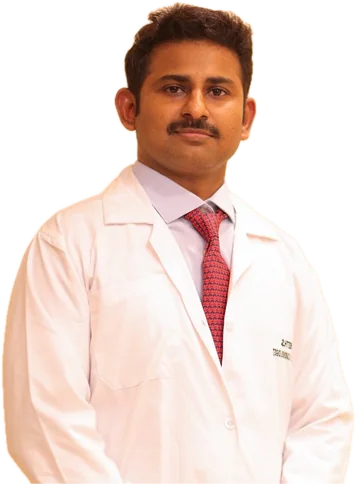
What an interventional cardiologist does
An interventional cardiologist treats heart disease from inside the blood vessels. A thin tube called a catheter goes in through the wrist or the groin, and the work is done through it: opening blocked arteries, placing stents, fitting pacemakers, and replacing or repairing heart valves without open-heart surgery.
He also sees patients in clinic for heart check-ups and for symptoms such as chest pain, breathlessness and palpitations.
What he treats
- Angioplasty: primary angioplasty for heart attacks, image-guided angioplasty with IVUS and OCT, angioplasty supported by IABP or Impella, chronic total occlusions and other complex angioplasty
- Coronary angiogram
- Permanent pacemakers, including leadless pacemakers
- Structural heart procedures: right and left heart catheterisation, TAVR, TMVR, and PFO and ASD device closure
- Renal denervation, for blood pressure that stays high despite medicines
- Treatment for atrial fibrillation
Read more about each area of care:
How he works with you
Explaining things is a large part of how he works. Before a test or a procedure, he goes through why it is suggested, what it involves and what the other choices are, so that you and your family can decide together.
For the first visit, bring earlier reports, a list of your current medicines and a note of anyone in the family who had heart trouble, and at what age.
Qualifications and registration
- Degrees
- MD, DM
- Specialty
- Interventional cardiology
- Medical registration no.
- to be added
Where he practises
- Spashta Healthcare, off Bannerghatta Road (BTM Layout 6th Stage)
- Apollo Hospitals, Bannerghatta Road
- Apollo Hospitals, Jayanagar
- Apollo Hospitals, Sarjapur Road
Have a question for Dr Praneeth?
You can ask here on WhatsApp.
Ask on WhatsAppIf you or someone near you has chest pain, sudden breathlessness, fainting or a racing heartbeat that does not settle, call an ambulance (108 or 112) and go to the nearest emergency department.